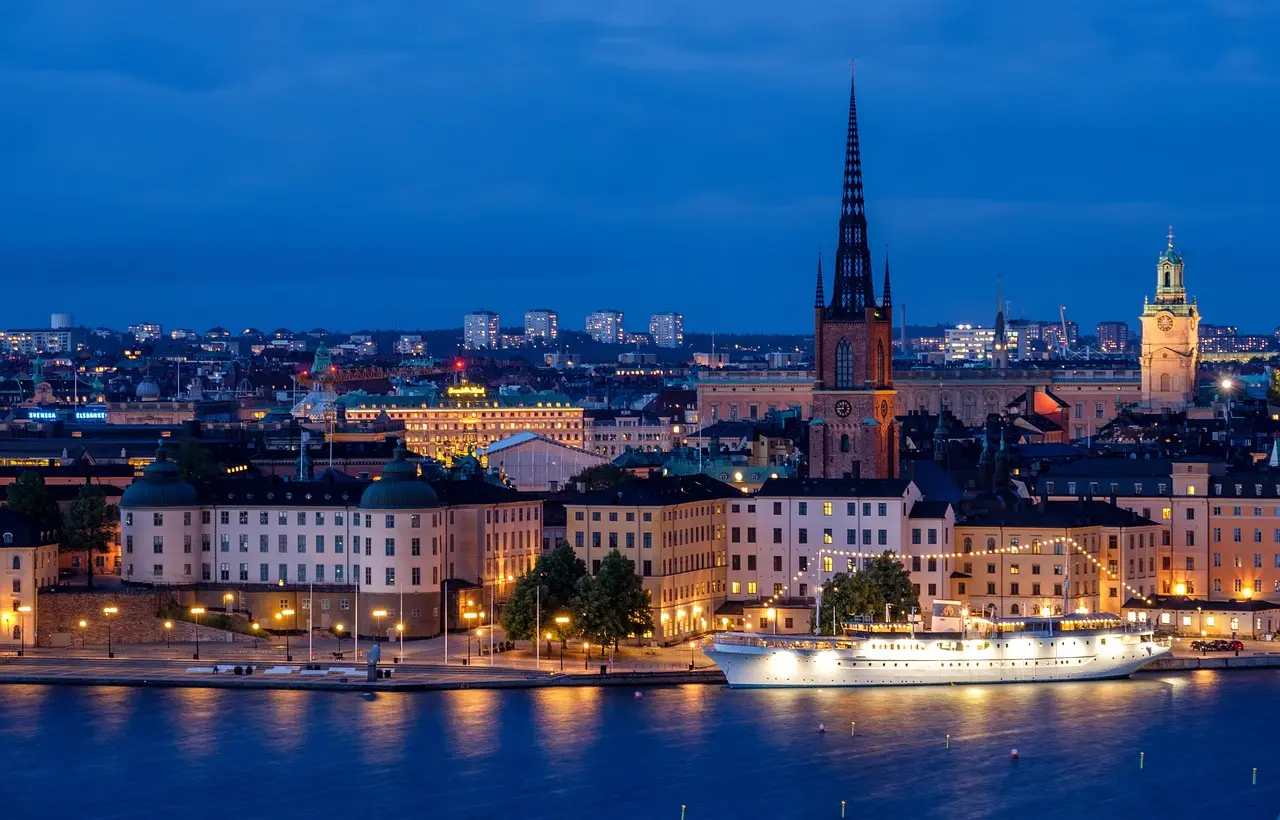
Walk Gamla Stan's cobbled lanes, cruise the Stockholm archipelago, and sort SL transit cards plus eSIM data before you land.
更新于 2026-11-06
Stockholm is really two trips in one. In the morning you're squeezing down a 90-centimetre alley in Gamla Stan, past buildings that have watched the city since the 1200s. By early afternoon you're on a boat threading between rocky islets, the city skyline shrinking behind you. This guide covers the pairing: how to walk the Old Town, which Djurgården museums deserve pre-booked tickets, how to reach the archipelago town of Vaxholm, and how to sort your SL transit card and eSIM before you land so nothing eats into your sightseeing time.
Stockholm was built on islands, and it never stopped being a maritime city. Gamla Stan sits on Stadsholmen, the island where the town began in the 13th century, and the archipelago stretches east from downtown into roughly 30,000 islands, islets and skerries where the Baltic begins. The same water that laps the Old Town's quays eventually reaches villages like Vaxholm an hour away by ferry.
Practically, the pairing works because Stockholm is compact. You can walk Gamla Stan end to end in under an hour, and the archipelago boats leave from Strömkajen, a short stroll from the Royal Palace. Add a viewpoint walk on Monteliusvägen and you've got a full, satisfying city-and-sea loop. If you like this old-town-plus-water formula, our Copenhagen neighborhoods walk and Amsterdam canals and Museumplein itinerary follow a similar rhythm.
Start at Stortorget, the main square and the historic heart of the Old Town. The gabled merchant houses in ochre, rust and gold are the most photographed façades in Stockholm, and the square was the site of the 1520 Stockholm Bloodbath, the massacre that helped ignite the Swedish war of liberation. Look closely at the corner house's white façade and you may spot a cannonball embedded in the wall; legend ties it to that massacre, though historians doubt the story. The Nobel Prize Museum faces the square, worth a look if the history of the prizes appeals to you.
From Stortorget, the lanes fan out. Västerlånggatan, the main drag, is touristy but atmospheric; the parallel streets, like Österlånggatan, are calmer. Detour to Mårten Trotzigs Gränd, the narrowest alley in Stockholm, which squeezes down to about 90 centimetres before climbing a steep staircase back up to street level. It's a two-minute detour that captures what Gamla Stan is about better than any souvenir shop.
North of the quarter sits the Royal Palace (Kungliga Slottet), one of the largest palaces in Europe with more than 600 rooms and the monarch's official residence. Visitors can tour the Royal Apartments, the Treasury with its crowns and regalia, and the palace museums. The changing of the guard draws crowds in front of the outer courtyard; it happens most days in summer with a reduced schedule off-season, so check the official palace or army site for times. For another capital done on foot, see our .
Finish your walk across the bridge to Monteliusvägen, a clifftop path on the northwestern edge of Södermalm. It runs only about 500 metres along Mariaberget, but the panorama over Riddarfjärden toward the City Hall tower is the best free view in central Stockholm, especially at golden hour.
Djurgården, the green island just across the water from Gamla Stan, holds the city's two headline attractions, and both draw serious summer crowds.
The Vasa Museum houses a warship that sank on its maiden voyage in 1628, barely out of Stockholm's harbor, and stayed on the seabed until it was salvaged in 1961. The recovered hull, nearly all original timber, fills a purpose-built hall you can circle on multiple levels. It's one of Scandinavia's most visited museums, and in July the walk-up queue can stretch long. Pre-booking or arriving early in the day is the standard advice; check the museum's official site for current ticketing and any timed-entry rules before you go.
Skansen, right next door, is the world's oldest open-air museum, founded in 1891. It gathers historic buildings from across Sweden alongside Nordic wildlife, moose, reindeer, brown bears and wolves, on a hillside with views over the water. Families easily spend half a day here, and summer brings outdoor concerts and the famous sing-along evenings. Like the Vasa, Skansen sells timed entry in peak season, so booking ahead saves standing in line.
The little SL ferry from Nybroplan across to Djurgården is the most scenic approach, and it counts as a normal SL ticket (more on that below). Djurgården also hosts the ABBA Museum and Gröna Lund amusement park if you want to extend the day.
Vaxholm, about an hour northeast of the city, is the classic first taste of the archipelago. Classic archipelago boats of Waxholmsbolaget depart from Strömkajen near Gamla Stan, and the ride itself is the attraction: summer channels are busy with sailboats, and the islands get rockier and lower as you go. Vaxholm town is a knot of wooden 19th-century houses, cafés and fika breaks, plus the Vaxholm Fortress on its own islet, which houses a small fortress museum reachable by a short shuttle boat in season. Note that these archipelago ferries are commercial operators, separate from Stockholm's SL transit system, so budget for a separate ticket.
If you have more time, islands like Grinda and Sandhamn are popular next steps, with faster commercial cruises running to Sandhamn in summer. Schedules thin out dramatically from autumn to spring, so check operator timetables before committing to an island. Even in the off-season, Vaxholm runs year-round and makes an easy half-day.
Stockholm's transit authority, SL, runs the metro, buses, trams and city ferries on one ticket system:
Data in Stockholm solves real problems: live SL timetables, Google Maps for the maze of Old Town lanes, e-tickets for the Vasa Museum, and ferry departure boards for the archipelago. A travel eSIM covers Sweden under a European plan, and you can install it before departure so it's live when you land. Our Europe eSIM guide covers how regional plans work, and if you're new to the technology, start with what an eSIM actually is.
Coverage in central Stockholm and on Vaxholm is solid on Swedish networks, but signal can thin out on remote outer skerries, so download offline maps for your island route. If you need your home number for banking codes while traveling, dual SIM travel tips explain keeping both active. Not sure how much data a city-and-boat itinerary burns? Our data needs guide helps you size the plan.
In summer, yes, it's strongly advised. The museum is one of Scandinavia's most visited and walk-up lines can be long in peak season. Book through the official museum channel and check current timed-entry rules before your visit.
Yes. The SL ferry from Nybroplan to Djurgården is part of the regular transit network, so a standard SL ticket or travelcard covers the crossing. Archipelago ferries to Vaxholm are separate commercial operators with their own fares.
Waxholmsbolaget boats and commercial archipelago cruises depart from Strömkajen, a few minutes' walk from Gamla Stan. The trip takes about an hour, and services run year-round to Vaxholm, though schedules are far denser in summer. Check operator timetables on the day you travel.
On the main islands like Vaxholm, generally yes, Swedish network coverage is reliable. Tiny outer islands can be patchy. Download offline maps and save your ferry timetable before leaving the city.
Yes, easily. It's a 10 to 15-minute walk across to Södermalm, and the Monteliusvägen viewpoint is free and open at all times. Sunset is the busiest and most beautiful time to go.
Stay connected: Set up a European eSIM before you fly so maps and ferry timetables work from the moment you land; see Europe coverage on PingRoam plus our install guides for iPhone and Android.
Worth booking: Vasa Museum timed entry, Skansen tickets, Royal Palace apartments, and a guided archipelago boat tour are the Stockholm experiences travelers most often pre-book. Browse options on PingRoam tickets to lock in the busy ones before you arrive.
