A one-day Seoul plan pairing Gyeongbokgung and Changdeokgung with Hongdae and Dongdaemun nightlife, plus ticket, transit, and eSIM connectivity tips.
حدّث في 2026-10-22
Seoul doesn't ask you to choose between history and hedonism. Before lunch you can stand in a 600-year-old royal courtyard, and by midnight you can be watching a busker shred a guitar outside a Hongdae convenience store, soju in hand. One long day, done right, covers both. Here's how to string together Gyeongbokgung Palace, Bukchon Hanok Village, Changdeokgung Palace, and the Dongdaemun Design Plaza, then close out the night in Hongdae or above the city at N Seoul Tower.
The geography does most of the work. Seoul's five Joseon-dynasty palaces sit clustered in Jongno-gu, all within walking or a short subway hop of one another. Bukchon's hanok-lined lanes stitch Gyeongbokgung to Changdeokgung. Then the same T-money card that got you to the palace gates carries you to Hongdae's neon or the riverside glow of Dongdaemun in under half an hour.
It's a rhythm you'll recognize if you've done older cities like Tokyo or Edinburgh, where imperial history and late-night districts share a subway map. Seoul just compresses it tighter. The catch: palace entries and Secret Garden slots are timed and popular, and moving fast between districts means your phone has to work the whole time. Sort tickets and connectivity before you leave, and the day runs itself. Browsing destinations to see where else your eSIM covers is a good habit at this stage, especially if Seoul is one stop on a longer Asia route.
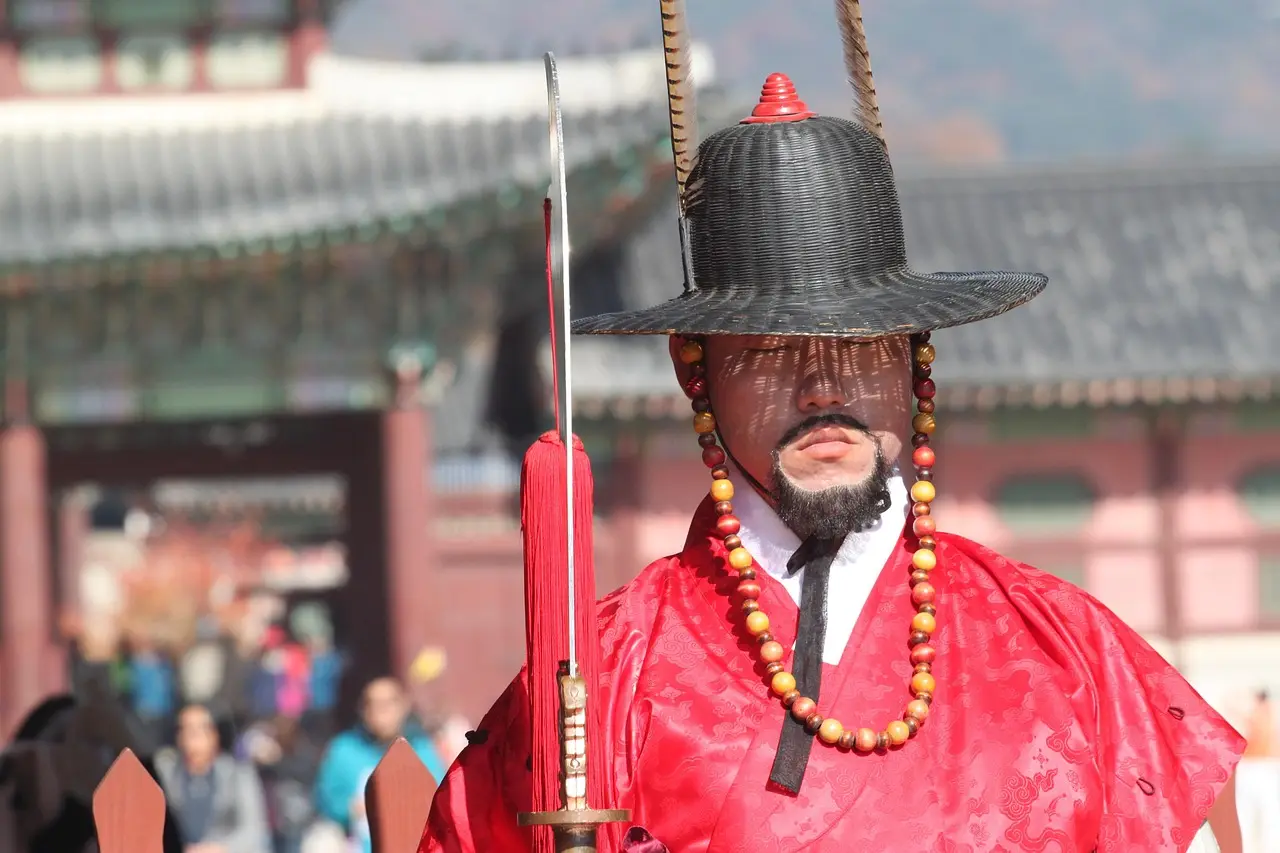
Start at Gwanghwamun Square, the broad plaza fronting Gyeongbokgung's main gate, where the statues of King Sejong and Admiral Yi Sun-sin watch over the morning commute. The Royal Guard Changing Ceremony takes place in front of Gwanghwamun Gate, typically late morning and again in the afternoon on days the palace is open; confirm current times on the official palace site before you build your schedule around it. Costumed guards, drums, and gate keys make it one of Asia's better free ceremonies, and it lasts just long enough to fuel up on coffee afterward.
Inside Gyeongbokgung, head straight past Gyeonghoeru Pavilion, the throne hall Geunjeongjeon, and the back hill of Hyangwonjeon and its pond, which is the postcard shot most visitors linger on. Note that Gyeongbokgung is closed Tuesdays. Rows of hanbok rental shops cluster near the gate, and visitors in traditional hanbok have historically entered free; rules shift, so check before you budget around it. Either way, wandering the courtyards in a rented hanbok is the single most popular thing to do here, and the photos explain why.
Exit toward the east and follow the stone walls toward Bukchon Hanok Village, a hillside neighborhood of preserved hanok homes between the two palaces. The famous lookout over the tiled roofs sits partway up the lane near Gahoedong. Remember people live here: keep voices down and skip the photo shoots inside private alleyways, especially during posted quiet hours.
From Bukchon it's a 10-minute downhill walk to Changdeokgung Palace, a UNESCO World Heritage Site and, for many travelers, the more atmospheric of the two palaces because its buildings fold into a pine-covered hillside rather than standing in rigid ranks. The grounds are open more freely, but the Huwon, better known as the Secret Garden, is the reason to come: a 78-acre royal rear garden with lotus ponds, pavilions, and ancient trees. Access is by guided timed entry only, and slots vanish first.
Three rules save the day. One: book the Secret Garden tour ahead, since walk-up slots are rare in peak season and on weekends. Two: remember the closures bite differently, with Gyeongbokgung dark on Tuesdays and Changdeokgung on Mondays, so a Monday visit flips your order. Three: an integrated combination ticket covering the main palaces plus Jongmyo Shrine has long existed as a money-saver for palace-hoppers; current pricing is on official sources, and prices here change, so verify rather than trust a blog.
Palaces also run seasonal evening openings in warmer months, when lantern light turns the courtyards into something out of a historical drama. Those night slots are ticketed and sell out fast. For travelers who prefer locking in sightseeing logistics in one place, PingRoam's tickets hub covers pre-booked attractions and tours in cities worldwide, and Seoul's timed-entry palace experiences are exactly the kind of thing worth securing before your flight.
By mid-afternoon, palace fatigue is real. Slide south into Insadong, Seoul's traditional-arts quarter, for a slow hour of tea houses, calligraphy shops, and the spiraling crafts arcade at Ssamziegil. This is where you rest your feet, charge your phone at a cafe, and eat something hot before the night leg. Insadong also happens to be where most tourists rent hanbok if they skipped it at the palace, and it borders Jogyesa, the striking head temple of Korean Buddhism, whose multicolored eaves are worth ten minutes.
From Jongno 3-ga Station, Line 5 runs a few stops east to Dongdaemun History & Culture Park, where the Dongdaemun Design Plaza's flowing, spaceship-silver curves (designed by Zaha Hadid) contrast hard with the ancient city gate it sits beside. The DDP hosts design exhibitions and seasonal night markets, and the field of LED roses glowing outside the building has become a free night attraction in its own right. The surrounding Dongdaemun wholesale shopping towers stay open into the small hours if you want to shop instead of party.
Pick one headline act for the night. Hongdae, the district around Hongik University, is Seoul's youth-culture engine: buskers at Hongdae Playground, indie clubs, street food alleys, and noraebang (karaoke) rooms that run until sunrise. It's loud, cheap, and the best people-watching in the city for the under-30 crowd, though plenty of older travelers love it too.
Itaewon, on Line 6, skews more international, with rooftop bars and one of the most varied food scenes in Korea. For a quieter finale, take the Namsan cable car (or hike up the wooded paths) to N Seoul Tower, where the observation deck and its fence of love padlocks look down on a sea of city lights. Couples queue for the deck; solo travelers come for the skyline. On the way home, the Cheonggyecheon stream, a restored waterway lit up at night near Jongno, makes a calm 15-minute walk that conveniently points you back toward the palace district.
Buy a T-money card at any subway station convenience kiosk, load it with cash, and tap through. It works on buses and in convenience stores too, and the subway is genuinely tourist-proof: signage is bilingual and station exits are numbered, so "Exit 5" becomes your new compass heading. Key stops for this itinerary are Gyeongbokgung Station and Anguk Station on Line 3, Jongno 3-ga (Lines 1, 3, and 5), Dongdaemun History & Culture Park (Lines 2, 4, and 5), and Hongik Univ. Station on Line 2.
One warning that catches partiers every weekend: last trains cluster around midnight, with some busier lines running slightly later. Miss the final train and your options are a late-night taxi, the Kakao T rideshare app, or waiting for the first morning service. Check the last-train time posted on platform screens before your third round in Hongdae.
Korea blankets itself in free public WiFi, and it's genuinely decent in stations, cafes, and even parks. But palace ticketing, Naver Map lookups, subway reroutes, and splitting from your group in Hongdae all run smoother on a data plan you don't have to think about. And there's a Korea-specific catch: Google Maps' walking and driving directions are limited there, so most travelers switch to Naver Map or Kakao Map, which work better with a stable connection the moment you land at Incheon.
An eSIM solves this before departure. Install it at home over WiFi, and it activates when you touch down, no airport counter, no passport-registration queue for a physical SIM. If you're new to the technology, start with what an eSIM actually is, then follow the setup guide for iPhone or Android. Not sure your phone supports it? Run an eSIM compatibility check first, and if you're keeping your home number active for calls while roaming on data, the dual-SIM and eSIM travel tips guide explains the setup. For a one-day-plus-itinerary city, even a modest data pack goes far; this guide on how much eSIM data you need helps you size it.
Yes, comfortably. They're a 15-minute walk apart through Bukchon Hanok Village. Give Gyeongbokgung two hours in the morning, walk Bukchon, then spend the early afternoon at Changdeokgung. Add a Secret Garden slot only if you can get one, and start early, since palaces stop admitting visitors well before official closing time.
The Huwon (Secret Garden) is open only on guided, timed-entry tours, with sessions offered in multiple languages and in Korean. Reserve in advance through official channels, especially for spring and autumn weekends, since walk-up availability is thin. Hours and tour times shift seasonally, so check the palace's official site rather than cached blog posts.
Gyeongbokgung closes Tuesdays; Changdeokgung and most of the other Joseon palaces close Mondays. Jongmyo Shrine also closes on set days, so a Monday or Tuesday trip reshuffles your itinerary. Planning around these closures is half the battle.
Free WiFi is widespread, but it's patchy exactly when you need it most, mid-palace for ticket QR codes, hailing a Kakao T taxi at 1 a.m., or rerouting in a subway station. Since Naver Map and Kakao Map largely replace Google Maps in Korea, an eSIM keeps navigation reliable from wheels-down. See how eSIMs work if you're deciding.
Yes, and that's the recommended move. Install over home WiFi, and the plan activates on the local network when you arrive. Guides for iPhone and Android walk through it in a few minutes.
Final departures land roughly around midnight on most lines, slightly later on some trunk routes like Line 2. Platform screens show the last train time for your direction; after that, taxis and Kakao T fill the gap until morning service resumes.
Stay connected: Check PingRoam destinations for eSIM coverage across your whole route, and set yours up in advance with the iPhone install guide or the Android install guide.
Worth booking: Secret Garden timed tours at Changdeokgung, seasonal palace night openings, N Seoul Tower observation tickets, and an evening food street tour in Jongno or Hongdae all reward advance booking. Browse PingRoam tickets to lock in sightseeing before you fly.
