خطط زيارة Queenstown حسب الموسم: أزهار الربيع، مهرجانات الشتاء، رحلات مشي وأيام على البحيرة، ونصائح eSIM للبقاء متصلًا في جبال جنوبية ألبرتا
حدّث في 2026-09-11
Queenstown has a habit of rewriting itself every few months. The same strip of cafes on the Lake Wakatipu waterfront that hums with hikers in January turns gold and drowsy by April, then swaps trail shoes for ski boots by July. Timing matters more here than almost anywhere else in New Zealand: it decides whether you're standing under cherry blossoms in the Queenstown Gardens, summiting Ben Lomond in daylight that lingers past 9pm, or chasing fresh snow at Coronet Peak. Here's how each season plays out, what to reserve ahead, and how to keep your data working deep in the Southern Alps.
Sitting at 45 degrees south on the shore of an 80-kilometre glacial lake, Queenstown gets four genuine seasons, and the town reinvents itself for each one. For northern hemisphere travellers that's the fun part: you can ski in July and swim in the lake in January, sometimes within the same year.
The other reason to plan around the calendar is crowds and prices. Christmas through January is peak summer, the July school holidays are peak ski, and mid-April weekends draw leaf-peepers to Arrowtown. Shoulder windows in late spring and early autumn tend to be quieter, cheaper and, in autumn's case, arguably the most beautiful time of year to be here.
Spring runs September to November, and it arrives with cherry and plum blossom in the streets and on the peninsula of the Queenstown Gardens, right beside town. The gardens are an easy hour: rose beds, mature oaks and pines, a free disc golf course, and a flat waterfront loop with views across Lake Wakatipu to the Remarkables still dusted with snow. That combination, blossom in the foreground and white peaks behind, is the classic spring postcard.
Spring is also the season of two-for-one days. Coronet Peak often keeps lifts spinning into early October, so you can ski in the morning and walk among blossom in the afternoon light. And it's prime time for the short drive to Arrowtown, the gold-rush village about 20 minutes away, where a preserved Chinese Settlement and a streetscape of 1860s shopfronts make for a half day of easy wandering before summer crowds arrive.
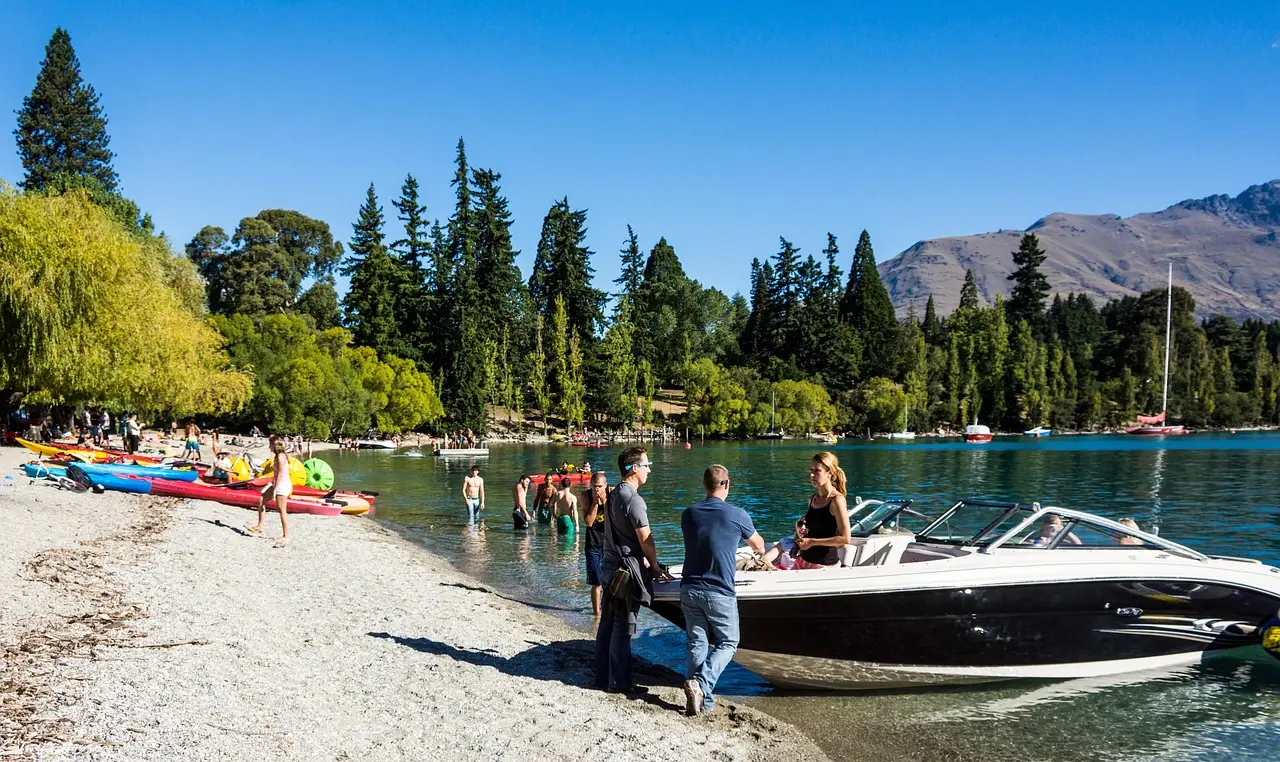
December to February is lake season. Locals swim at Queenstown Bay, kayaks and paddleboards come out along the waterfront, and sunset drifts past 9pm, which means hiking after work is a genuine thing here.
The big summer objective for fit walkers is the Ben Lomond Track, which tops out at 1,748 metres with a full panorama over Lake Wakatipu, the Remarkables and, on clear days, Mount Aspiring country. From town it's a solid full-day climb; you can shorten it by riding the Skyline Gondola up Bob's Peak and picking up the track near the top station. Either way, start early: the upper slopes are exposed, and afternoon sun at this latitude is fierce. Bring more water than feels reasonable.
For a gentler summer day, drive the shore of the lake to Glenorchy at its head, or ride the gondola up Bob's Peak for the luge track and sunset views, then walk back down through the pines.
March to May is the locals' favourite, and it's easy to see why. Arrowtown's deciduous trees, larches among them, turn intense gold, most years peaking around mid-April, and the whole valley glows in the low afternoon light. The town runs a small autumn festival most years, and even without it, a walk along the Arrow River with the canopy overhead is worth the drive on its own.
Autumn is also prime hiking weather: cooler days, fewer people on the Ben Lomond Track and the trails around the Wakatipu basin, and stretches of settled weather that can stretch on for weeks. Early autumn overlaps with grape harvest in the Gibbston wine valley between Queenstown and Arrowtown, pinot noir country, if you fancy a tasting room between walks.
Winter, June to August, is why Queenstown first put itself on the map as a snow town. Coronet Peak, the closest field, is a short drive up a winding access road and typically opens for the season in June. The Remarkables sits in a dramatic alpine basin across the valley with wide beginner terrain and terrain parks. Both are beginner-friendly, both run ski school programmes, and both fill up during the July school holidays.
Opening weekend usually coincides with the town's famous winter festival, a long-running celebration of street parties, fireworks and slightly absurd snow-themed events that takes over the town centre. Even if you don't ski, winter Queenstown is worth it: crisp blue-sky days on the lakefront, night lights on the mountains, and hot pools with canyon views just out of town.
One practical note: rental car companies generally require snow chains in winter, and ski-field roads are checked on snow days, so rent them with the car.
Queenstown invented commercial bungy jumping; the original Kawarau Bridge site, 43 metres over the river, has been sending people off the platform since 1988, and the 134-metre Nevis jump nearby is its big sibling. Jet boating the narrow Shotover canyons is the other local classic, and the Skyline Gondola and its luge track on Bob's Peak are the family-friendly default.
In peak periods, Christmas and New Year, Chinese New Year, school holidays and good snow weekends, all of these can sell out days ahead. Bungy and jet boat sessions in particular run on fixed time slots, so book them early in your trip rather than your last day: if high water or wind forces a cancellation, you'll want room to rebook. For the gondola, check the operator's current status before you lock in a date, as the site has seen recent upgrade work, then buy ahead for busy weeks.
Queenstown's town centre is walkable, and a local bus network links it with Frankton and the airport. Ski shuttles cover the fields in winter, and app-based rides work in town, though there are far fewer drivers than in a big city, which is one more reason to have a working data connection for maps and bookings.
Coverage in the Wakatipu basin is good, but it thins fast once you climb: above the treeline on Ben Lomond, on the Glenorchy road, and especially on the long drive toward Milford Sound, expect dead zones. That makes an eSIM a practical choice. If you're new to the technology, our guide to what an eSIM actually is is a quick read, and it's worth checking your phone's compatibility before you buy.
Three habits will save you hassle. Install the eSIM before you leave home, on iPhone or Android, and set it up as a secondary line so your home number still receives banking codes. Download offline maps for Otago and the South Island, plus trail notes, before you leave Wi-Fi. And if you're unsure how much data a trip like this eats, our data sizing guide breaks down typical usage for navigation, bookings and mountain webcams.
The Southern Alps can deliver four seasons in a single afternoon, any time of year. The formula that works: merino base layers, a warm mid-layer, and a proper waterproof shell, plus sturdy shoes with grip even if you're only doing lakefront walks. Sun protection matters more than most visitors expect; New Zealand's UV is intense, including on winter snow days, so pack sunscreen and sunglasses year-round. Add swimwear for summer lake days and hot pools, gloves and a beanie for winter, and a light daypack for layer-shedding on the climbs.
Town centre cafes and hotels have Wi-Fi, but trailheads, ski-field roads, rideshare pickup spots and Milford Sound day trips all work better with your own connection. An eSIM with offline maps downloaded as backup covers both problems.
Most years the golds peak around mid-April, but it shifts with the season. Check local visitor information closer to your dates, and book Arrowtown accommodation early if you're targeting that window, as it's the town's busiest stretch.
Yes, if you're travelling in peak summer, snow season or over public holidays. These run on timed sessions and fill first. Booking early in your stay also leaves room to rebook if weather causes a cancellation.
Coverage is usually fine at the base areas of Coronet Peak and The Remarkables, but it's patchy above the treeline on Ben Lomond and along valley roads. Treat any mountain trip as offline-first: tell someone your plan, carry a physical map and don't rely on a signal for navigation.
Very. The winter festival, gondola views, lakeside walks, hot pools and the general snow-town atmosphere make it a strong trip even if you never clip into a boot. Just pack properly for short days and cold evenings.
Stay connected: Compare eSIM plans for New Zealand and the rest of your route on the PingRoam destinations page, then get set up before you fly with our iPhone install guide or Android install guide.
Worth booking: Reserve the Skyline Gondola and luge on Bob's Peak, a Kawarau Bridge or Nevis bungy session, a Shotover-style jet boat ride, and winter lift passes or lessons at Coronet Peak and The Remarkables ahead of peak travel dates. You can browse and book attractions and tours on the PingRoam tickets page.
